HOW IT WORKS
From session note to ICD-10 code
Finish the session note
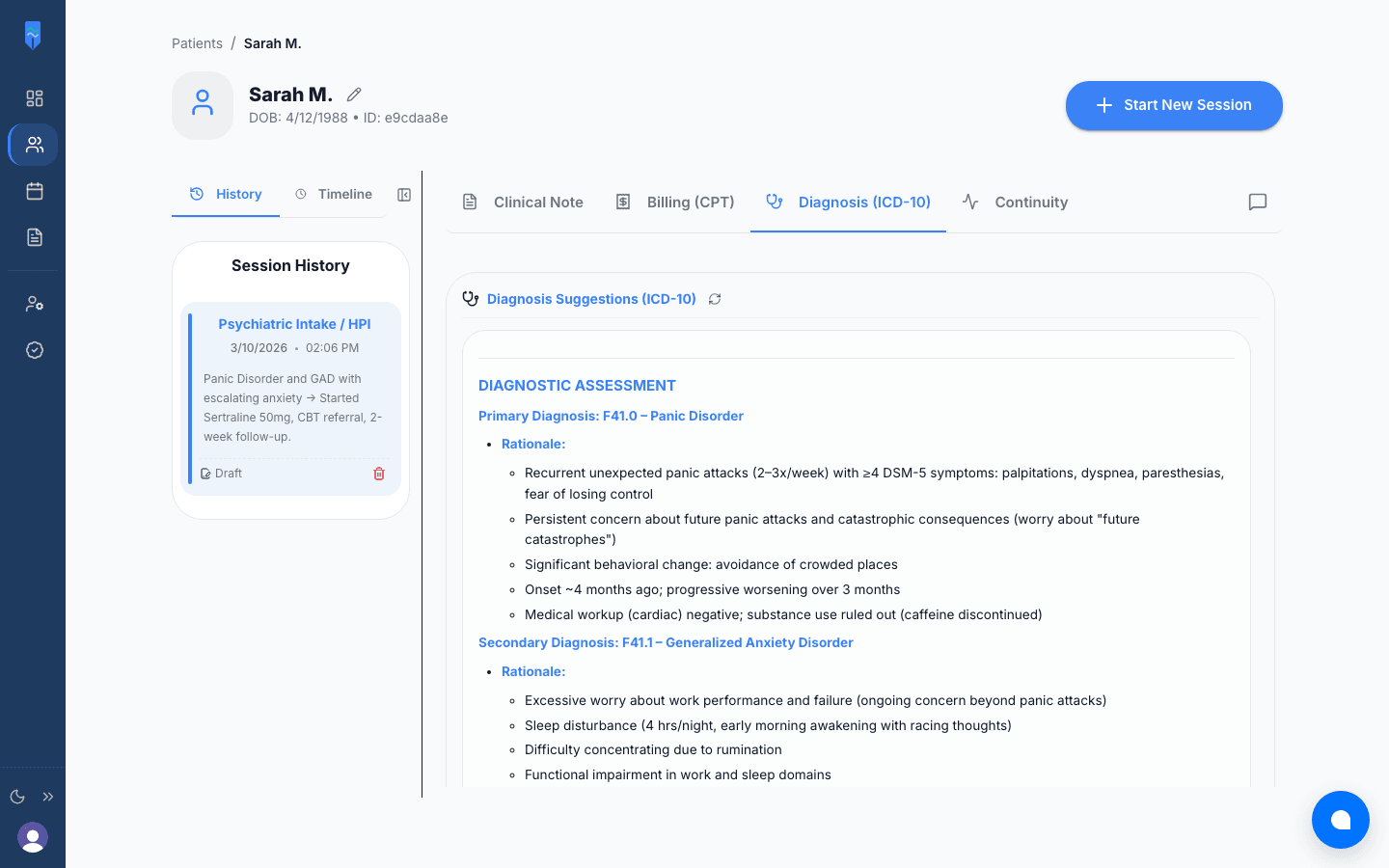
Record the session, pick a template, and review the note. Diagnosis AI works from what that note documents.
Review the suggestions
Each ICD-10 suggestion comes with the DSM-5 criteria it matched, so you can see why it was suggested.
Weigh the differentials
If more than one diagnosis fits, you get the alternatives and the reasoning behind each. Confirm the codes you agree with.
Frequently asked questions
Diagnosis AI works from DSM-5 criteria and ICD-10 classifications in its reference library, not from general knowledge. Each suggestion lists the criteria it matched in your note, so you can check the reasoning yourself. You make the diagnosis.
No. It puts the relevant codes and criteria in front of you, so you spend less time looking them up and are less likely to overlook a diagnosis the note supports. The call is yours.
ICD-10-CM codes, mapped to DSM-5 diagnostic criteria. It covers the diagnoses commonly used in outpatient psychiatry and therapy.
Yes. When the note leaves room for more than one diagnosis, Diagnosis AI lists differentials to consider and explains why, using what you documented.