Code what you documented
CPT codes your note can back up.
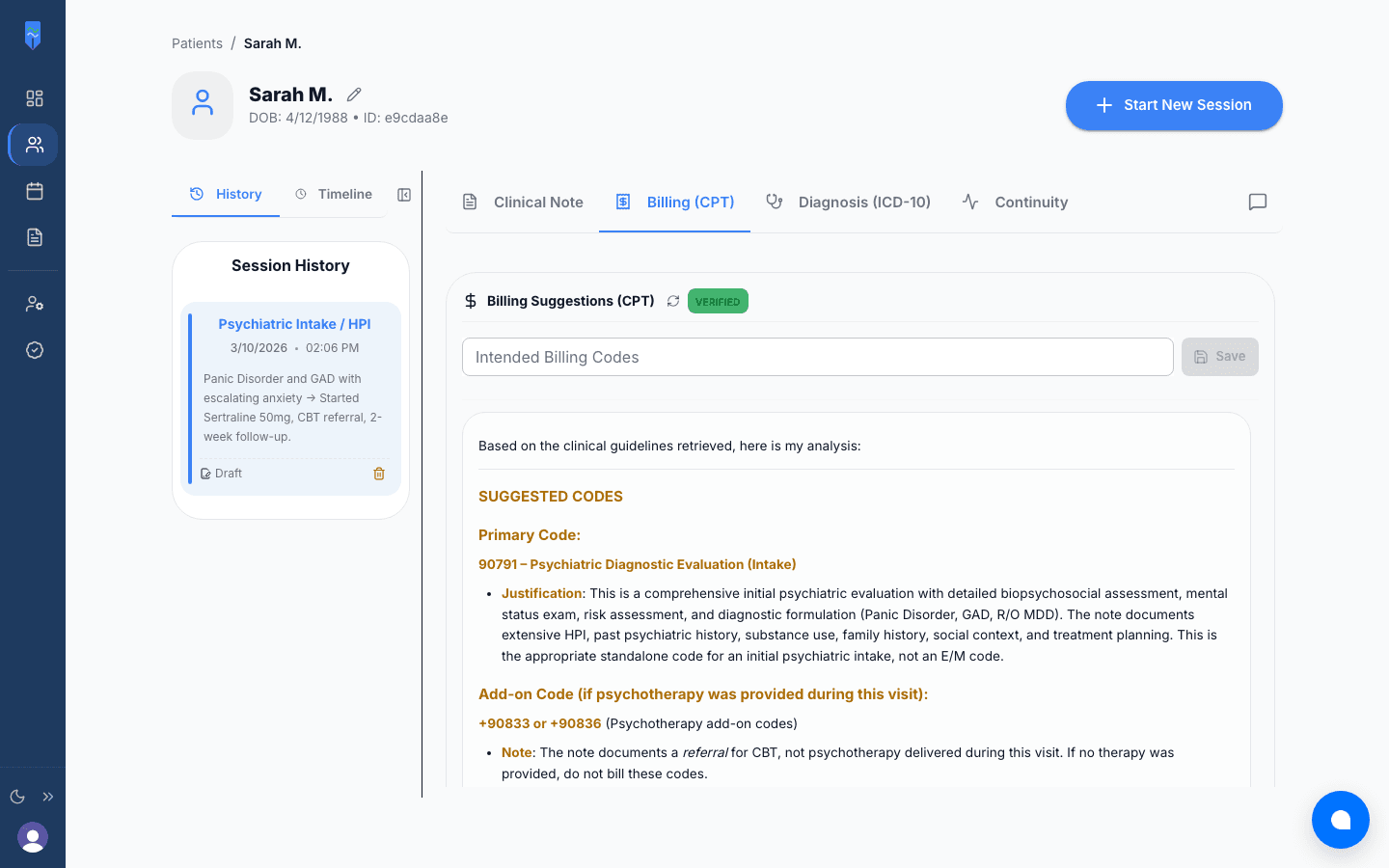
Billing AI reads the finished note and suggests CPT codes, each with a justification you can check. Tell it what you plan to bill and it scores that code against the note and points out what's missing before you submit.
Free to start, no credit card • Pro is $49/month
HOW IT WORKS
From finished note to billing codes
Write the note
Generate and review your session note as usual. Billing AI works from that note, so there is nothing extra to fill in.
Get CPT suggestions
It looks at the services, complexity, and content the note documents and suggests codes with a justification for each. Time-based codes come with a reminder to document your total time.
Check before you submit
Look over the compliance score for each code you plan to bill, any gaps in the documentation, and add-on codes the note supports. Then finalize.
Frequently asked questions
It reads what your note documents: the services you provided, the clinical complexity, and whether the required elements are there. It checks that against CPT billing reference material and suggests codes, each with a short justification. It does not score codes on time, because a note only captures what happened in session. For time-based codes it reminds you to document your total time separately.
It looks for them. When the note supports it, Billing AI suggests add-on codes next to the primary code, such as interactive complexity (90785) or a psychotherapy add-on with an E/M visit (90833, 90836, 90838). You decide what to bill.
No. It gives you suggestions to review, and you choose which codes to submit. If you work with a biller, the justifications give them something concrete to check against the note.
The codes mental health clinicians bill most: psychotherapy (90834, 90837), evaluation and management (99213 to 99215), psychiatric diagnostic evaluation (90791, 90792), and the add-on codes that go with them.